
UI for AI: Micro-interfaces move us beyond the chat.
Because models are getting better at coding, chatbots will get better at coming up with their own just-in-time interfaces.

The terminal made a massive come back in 2025. Building on how Chatbots made “texting” the primary interface with agents - it felt that perhaps text was the post-modern UX to rule them all. I don’t think that’s the case.
How can you explain in words your brand’s specific shade of orange? Text is not the death of UI.
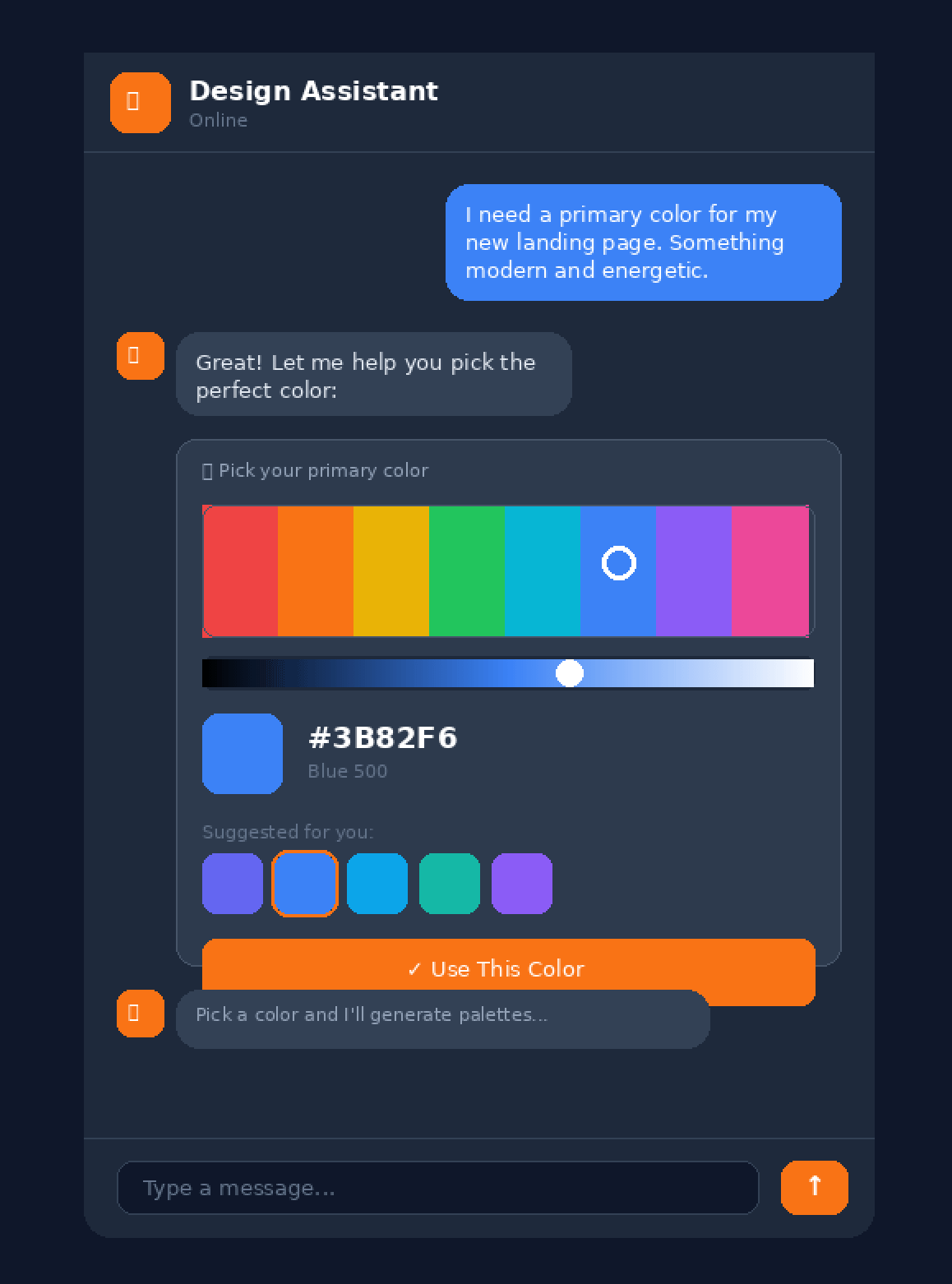
Last year, I wrote about voice - I’m now especially excited by the potential for more micro, just-in-time, interfaces that can make chatting with Claude Cowork / Code, ChatGPT, and of your favorite agents more loveable.
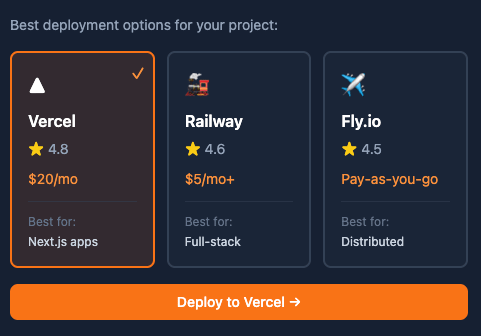
Micro-UIs like this make the user experience dramatically better. And the infrastructure to build them is more mature than most people realize.
What’s good about Micro Interfaces?
1. Less Friction. Faster Inputs. Lower Churn.
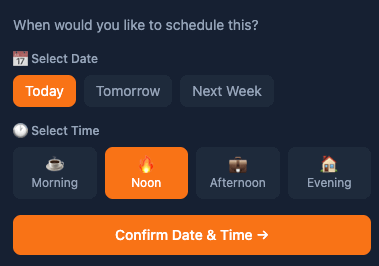
Clicking beats typing for structured input. This isn’t opinion — it’s why every successful product moved from command lines to GUIs in the 80s.
When I type “schedule a meeting with the design team next week,” the AI has to parse intent, ask for missing parameters, handle responses, confirm details, then execute. That’s 5+ round trips. Each one is a chance for misunderstanding.
With a micro-UI: date picker, time selector, attendee chips, location toggle. One submission. Done.
2. Richer Intent Capture
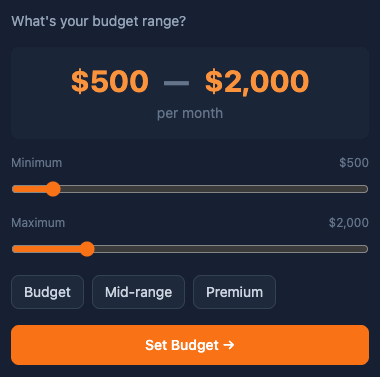
Text fails in predictable ways:
Picking Colors, locating items in an image.. are just impossible to do precisely with words alone.
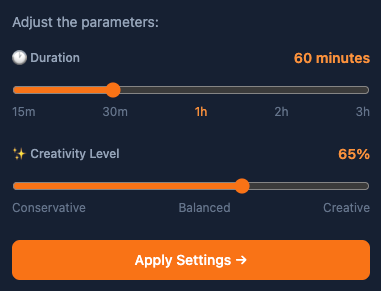
Ranges are verbose to explain in words - especially for non-numerical ranges (”somewhere between “medium intensity” and maybe “high intensity”?”)
Tags are hard to enumerate (”I want it to be modern, clean, maybe minimalist, but also warm...”)
Ratings get lost in hedging (”it was pretty good, I guess”)
Micro-UIs solve this with the right input for the job: sliders for ranges, chips for tags, stars for ratings. The agent captures exactly what the user means.
3. Transparency
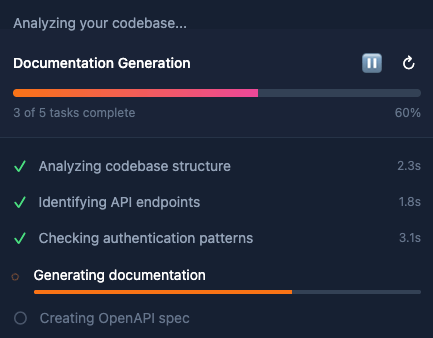
When an AI agent is doing complex work — analyzing a codebase, processing documents, making API calls — users get anxious. Is it stuck? Did it understand me?
A task progress micro-UI shows what the agent is doing right now, what’s completed, what’s pending. An approval card shows exactly what files will change before a refactor. Transparency builds trust.
Why Now?
Three things converged:
Models got good at frontend code. Claude and GPT-4 reliably generate React, HTML/CSS, and interactive widgets. Artifacts and Generative UI prove this at scale.
Protocol infrastructure shipped. MCP Apps, AG-UI, A2UI, and Agent Skills provide standards for rendering rich interfaces. Build once, deploy across Claude, ChatGPT, VS Code, and whatever comes next.
Skills make specialization easy. Anthropic’s Agent Skills let you package expertise — including UI patterns — into composable resources. The agent loads them dynamically when relevant. Partners like Figma and Notion already ship skills. It’s now an open standard with adoption from OpenAI and Microsoft.
Models Are Already Great at Frontend Code
The reason micro-UIs are quite mature already with agents: models and agent harnesses can reliably write, verify & run frontend code.
It felt that Gemini 3, Claude 4.5 and GPT-5 brought significant improvements in generate clean React components, HTML/CSS, and complex interactive widgets. Sort of a Retina Display moment for chatbots. Claude’s Artifacts let users create dashboards, games, and tools directly in chat. The Vercel AI SDK streams UI components from LLMs via React Server Components.
More importantly, agents can now use templates and skills to create just-in-time interfaces without generating everything from scratch. Anthropic’s Agent Skills standard packages instructions and resources that agents load dynamically. Skills for document creation (PowerPoint, Excel, Word, PDF) ship built-in. Partners like Figma, Notion, Atlassian, and Stripe have contributed their own.
Skills work across Claude.ai, Claude Code, the Agent SDK, and the API. OpenAI is reportedly testing a “Skills Editor” that exports Custom GPTs to the same format. Microsoft integrated it into VS Code. It’s becoming the standard way to give agents specialized capabilities — including UI generation.
The Stack for Micro & Just-in-time UI Is Already Mature
This isn’t early-stage experimentation. A complete ecosystem exists.
Protocols
MCP Apps (Anthropic + OpenAI) Tools return HTML rendered in sandboxed iframes. Supported by Claude, ChatGPT, Goose, VS Code.
AG-UI (Microsoft) Event-based protocol (~16 event types) over SSE/WebSockets. More flexible, more implementation work.
A2UI (Google) Declarative JSON → widget catalog. Agent describes intent, frontend renders.
Agent Skills (Anthropic) Natural language instructions packaged as composable resources. Now an open standard.
The fact that Anthropic, OpenAI, Microsoft, and Google are all shipping this tells you where things are headed.
Libraries
CopilotKit (17k+ stars) - Best for full agent-native apps. Most complete framework — supports all three GenUI types (static, MCP Apps, A2UI) with human-in-the-loop built in. Trade-off: heavier dependency.
Vercel AI SDK (12k+ stars) - Best for Next.js / React apps. Framework-agnostic, streams UI via React Server Components, great DX. Trade-off: RSC development currently paused.
assistant-ui - Growing Best for chat UI primitives. Less opinionated — good if you want building blocks, not a full framework.
shadcn/ui AI - 25+ components Best for copy-paste. No npm install — just grab the code. Understands AI SDK data structures.
What's Next?
I’m genuinely excited for delicious interaction designs to emerge from this. I think agents & apps will be much more personal, lovable, and easier to use when you don’t have to do all the typing all of the time. Beyond what feels like a quality of life improvements - I believe the real magic is that is proof that “just in time” software has arrived - and we’re seeing the front-end :) pun intended.
I’m Sherif Maktabi—I’ve built AI products at Amazon, UiPath, and startups too. Every two weeks, I write about the shifts that matter for people who build things.
If this was useful, subscribe to get the next one. And if you know someone who’d find this valuable, share it with them.
Sources
Protocols & Standards
MCP Apps: Extending servers with interactive user interfaces — Model Context Protocol Blog
MCP Apps are here: Rendering interactive UIs in AI clients — WorkOS
Introducing A2UI: An open project for agent-driven interfaces — Google Developers Blog
Anthropic and OpenAI Join Forces to Standardize Interactive AI Interfaces — Inkeep
Frameworks & Libraries
Implementation Examples
Create Interactive AI Tools with Claude Code’s AskUserQuestion — egghead.io
Implementing Claude’s Artifacts feature for UI visualization — LogRocket
Analysis & Comparisons